
SEO vs. Paid Advertising: Which Is Better for Long-Term Growth?

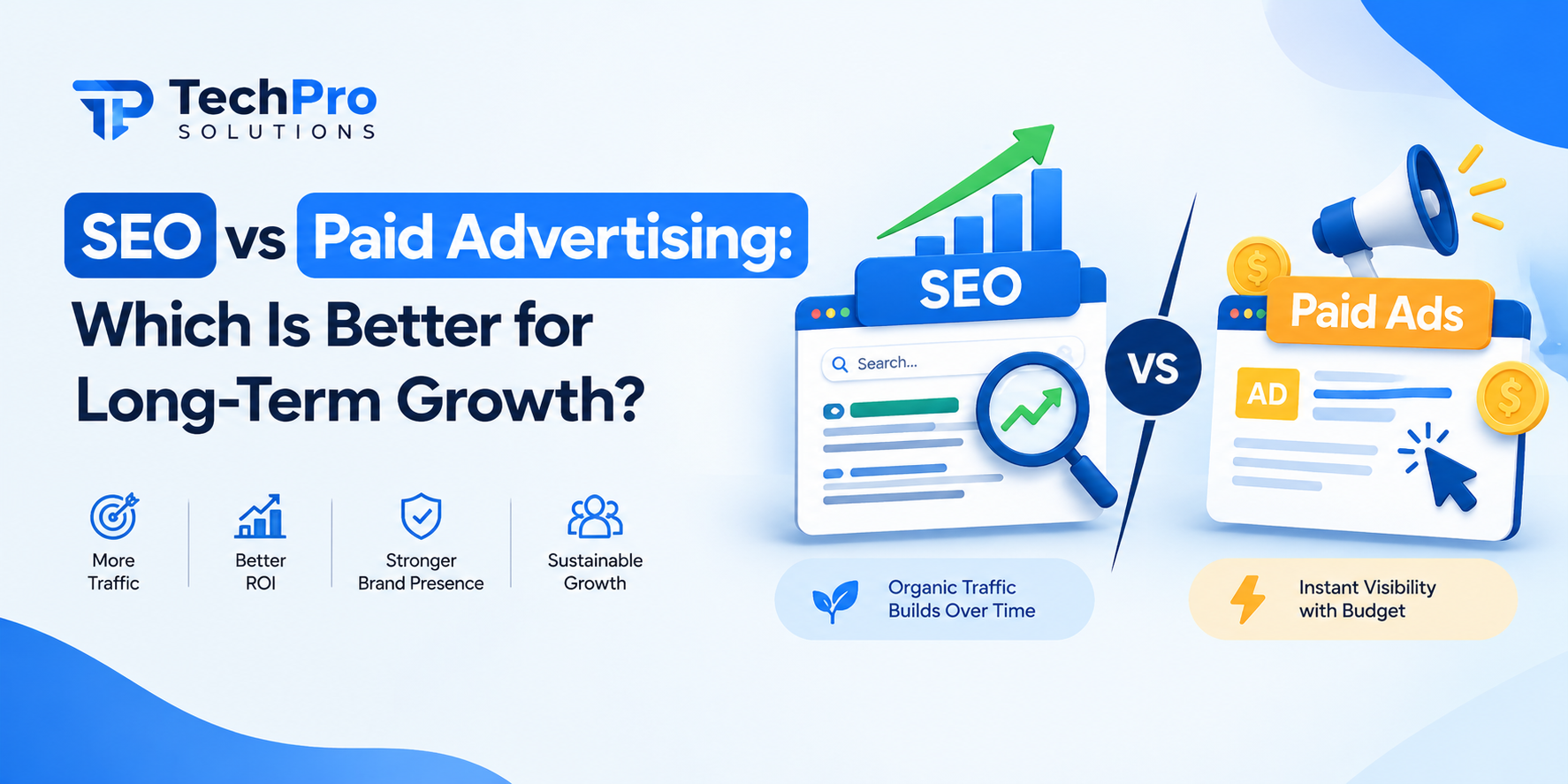
SEO vs. Paid Advertising: Which Is Better for Long-Term Growth?
Every business wants more customers, better visibility, and a steady flow of leads. But getting noticed online is not always easy. With so many businesses competing for attention, choosing the right digital marketing strategy can make a real difference.
Two of the most common ways to attract customers online are Search Engine Optimization (SEO) and paid advertising.
Both strategies can help businesses reach potential customers, but they work in different ways. SEO focuses on improving your website's visibility in organic search results, while paid advertising allows you to pay for visibility on platforms such as Google, Facebook, and Instagram.
This creates an important question for business owners: should you invest in SEO or paid advertising?
The answer depends on your business goals, budget, competition, and how quickly you want to see results. However, when it comes to long-term growth, understanding the strengths and limitations of both approaches is essential.
Let's look at how SEO and paid advertising work, how they differ, and which approach makes more sense for your business.
What Is SEO?
Search Engine Optimization, commonly known as SEO, is the process of improving a website so that it appears more prominently in organic search engine results.
When someone searches for a product, service, or answer on Google, search engines display pages they consider relevant and useful.
SEO helps your website become more visible for searches related to your business.
For example, if you run a web development company in Jaipur, you may want your website to appear when someone searches for:
Website development company in Jaipur
Affordable website development services
Custom website development for businesses
Professional web developers near me
SEO involves several activities, including:
Keyword research: Finding the words and phrases your potential customers use when searching online.
On-page SEO: Improving page titles, headings, content, URLs, internal links, and other website elements.
Technical SEO: Making sure search engines can crawl and understand your website, while improving performance and usability.
Content marketing: Publishing useful blogs, guides, and other content that answers customer questions.
Off-page SEO: Building your website's authority through relevant backlinks, mentions, and other external signals.
The main objective is to attract relevant visitors without paying for every individual click.
What Is Paid Advertising?
Paid advertising is a digital marketing approach in which businesses pay platforms to display their advertisements to selected audiences.
Common paid advertising platforms include Google Ads, Facebook Ads, Instagram Ads, and LinkedIn Ads.
Unlike SEO, paid advertising can provide visibility shortly after a campaign is approved and launched.
For example, a company offering website development services can create a Google Ads campaign targeting people searching for website development companies.
Its advertisement may appear above organic search results when the search and campaign targeting match.
Paid advertising can help businesses:
Generate leads quickly
Promote new products and services
Reach specific audiences
Increase website traffic
Run seasonal promotions
Test different marketing messages
Retarget people who previously visited their website
However, paid advertising requires continuous budget management. Once you stop paying for a campaign, the traffic and visibility generated by that campaign generally decline or stop.
SEO vs. Paid Advertising: Key Differences
Although both strategies aim to attract potential customers, they have different approaches.
1. Cost Structure
SEO requires investment in content creation, website improvements, technical optimisation, and ongoing work. You do not pay a search engine for each organic click, but SEO is not free.
Paid advertising requires a campaign budget. Depending on the platform and industry, you may pay for clicks, impressions, or other advertising actions.
2. Time to See Results
SEO generally takes time because search engines need to discover, evaluate, and rank your website content. Results can take several months and vary depending on competition, website condition, and strategy.
Paid advertising can start generating impressions and clicks much sooner, sometimes within hours of a campaign going live.
3. Long-Term Value
Well-maintained SEO content can continue attracting organic visitors even after its initial publication. It may generate traffic and enquiries over an extended period.
Paid advertising usually delivers traffic while the campaign is active and funded. Its performance depends on continued investment.
4. Audience Trust
Many users trust organic search results because they are selected by search engines based on relevance and other ranking signals.
Paid advertisements can also attract customers, but users may recognise them as sponsored placements.
5. Budget Control
SEO investment is usually distributed across content, technical work, and ongoing optimisation.
Paid advertising provides direct control over campaign budgets, bidding, targeting, and advertising schedules, although costs and results can fluctuate.
Why SEO Is Important for Long-Term Business Growth
SEO is particularly valuable for businesses that want to build a consistent online presence.
Instead of paying for every visit, you work towards creating a website that attracts relevant visitors through useful content and strong search visibility.
Here are some important benefits.
1. Builds Consistent Organic Traffic
People search online every day for products, services, and solutions to their problems.
If your website ranks for relevant search terms, it can attract visitors whenever people search for those topics.
For example, a company publishing helpful articles about website development, SEO, and AI automation may attract business owners who are actively researching these services.
Over time, a collection of useful, well-optimised pages can become an important source of website traffic.
2. Creates Long-Term Brand Visibility
When your business consistently appears for relevant searches, more people become familiar with your brand.
Even visitors who do not contact you immediately may remember your company when they need your services later.
Publishing informative content also gives potential customers an opportunity to understand your expertise before contacting your team.
3. Helps Attract High-Intent Customers
Not every website visitor is ready to purchase something.
However, some searches indicate that a person is actively looking for a solution.
For example, someone searching for "website development company for a startup" may have a stronger buying intention than someone searching for "what is website development?"
Targeting a combination of informational, commercial, and transactional keywords can help businesses attract people at different stages of the buying journey.
4. Supports Other Marketing Activities
SEO does not work in isolation.
Useful website content can support social media marketing, email campaigns, sales conversations, and other digital marketing activities.
For example, a well-researched blog can be shared on LinkedIn, converted into social media posts, or used as an educational resource during client discussions.
This allows businesses to get more value from the content they create.
Why Paid Advertising Is Useful for Faster Results
While SEO is valuable for long-term visibility, paid advertising has advantages when a business needs faster exposure.
1. Generates Traffic Quickly
A properly configured advertising campaign can start bringing visitors to your website soon after launch.
This is useful when promoting a new service, launching a product, or running a limited-time offer.
2. Reaches Specific Audiences
Advertising platforms provide targeting options that help businesses reach audiences based on factors such as location, interests, demographics, search intent, and previous interactions.
The available targeting options vary by platform and campaign type.
This can help businesses focus their advertising budget on audiences that are more relevant to their products or services.
3. Makes Campaign Testing Easier
Paid advertising allows businesses to test different headlines, offers, landing pages, and audience segments.
For example, a business can run two versions of an advertisement to understand which message attracts more enquiries.
These insights can help improve future campaigns and marketing decisions.
4. Supports Remarketing
Not every visitor contacts a business during their first website visit.
Remarketing campaigns can help businesses reconnect with eligible previous website visitors or audiences who interacted with their brand, subject to platform policies and tracking requirements.
This gives potential customers another opportunity to explore your services.
SEO vs. Paid Advertising: Which Is Better for Long-Term Growth?
If your main objective is to build sustainable online visibility, SEO generally offers stronger long-term potential.
A well-optimised website with relevant content can continue attracting visitors without requiring payment for every click.
However, SEO takes time, and there is no guarantee that a particular keyword will reach the first page of Google.
Paid advertising is more suitable when you need immediate visibility, want to test a new offer, or need to generate traffic within a short period.
The important thing is to match your marketing approach with your business objectives.
Consider these examples:
New business launching a service: Paid advertising can help generate initial exposure, while SEO builds long-term visibility.
Established business with a limited advertising budget: SEO may be a useful way to develop a more sustainable source of traffic.
E-commerce business running a seasonal promotion: Paid campaigns can help attract customers during a specific sales period.
Service-based business targeting local customers: Local SEO and targeted search advertising can work together to generate enquiries.
Neither approach is automatically better for every business.
Why Combining SEO and Paid Advertising Can Be More Effective
Instead of treating SEO and paid advertising as competing strategies, businesses can use them together.
This approach helps cover both short-term and long-term marketing requirements.
For example, imagine a company offering website development and digital marketing services.
It could use paid search campaigns to attract people actively looking for those services while building SEO-focused service pages and educational blogs.
The advertising campaign may generate enquiries sooner, while SEO gradually strengthens organic visibility.
There are several ways to combine both strategies.
Use paid ads while building SEO: Advertising can help bring traffic while your website's organic visibility develops.
Use advertising data for keyword research: Search terms that generate relevant clicks or conversions may provide useful insights for future SEO content.
Improve landing pages using SEO principles: Clear headings, relevant content, fast loading speed, and useful information can support both organic visitors and advertising traffic.
Retarget interested visitors: Use suitable remarketing campaigns to reconnect with previous visitors who have not yet converted.
Track performance together: Measure leads, conversions, customer acquisition costs, and revenue instead of focusing only on website traffic.
The aim is to create a marketing system where both channels support the same business goals.
How to Choose the Right Strategy for Your Business
Before investing in SEO or paid advertising, consider these factors.
1. Define Your Business Goals
Are you trying to generate immediate enquiries, build brand awareness, increase online sales, or improve long-term search visibility?
Your objective should guide your marketing decisions.
2. Understand Your Budget
Consider how much you can invest consistently.
SEO requires ongoing work, while paid advertising needs a campaign budget in addition to the time and resources required to manage it.
3. Study Your Competition
Look at how competitors attract customers.
Review their website content, search visibility, advertising messages, and landing pages. This can help identify opportunities and areas where your business needs improvement.
4. Understand Your Customers
Think about how potential customers search for your products or services.
Some may compare different providers before contacting anyone, while others may be ready to purchase immediately.
Your marketing strategy should address both types of customers where relevant.
5. Measure the Right Results
Do not judge marketing performance only by impressions or website visitors.
Pay attention to metrics such as:
Qualified leads
Conversion rate
Cost per lead
Customer acquisition cost
Organic traffic
Return on advertising spend
Sales revenue
These metrics provide a better understanding of whether your marketing investment is contributing to business growth.
Common Mistakes Businesses Should Avoid
Businesses sometimes invest in digital marketing without having a clear strategy.
Here are a few mistakes worth avoiding:
Expecting immediate SEO results: SEO requires time, regular improvements, and a realistic understanding of competition.
Running ads without a proper landing page: Sending paid traffic to a confusing or outdated website can waste advertising budget.
Targeting the wrong keywords: Traffic is not useful if visitors are not interested in your products or services.
Stopping SEO after publishing a few blogs: Content needs regular evaluation, updates, and improvements.
Ignoring conversion tracking: Without tracking leads and sales, it becomes difficult to understand which marketing activities are working.
Focusing only on traffic: A smaller number of relevant visitors can be more valuable than a large number of visitors who never become customers.
Final Thoughts
SEO and paid advertising both play important roles in digital marketing, but they serve different purposes.
SEO helps businesses develop organic search visibility, build credibility, and attract relevant visitors over time. Paid advertising provides faster exposure, audience targeting, and opportunities to test marketing campaigns.
For businesses focused on long-term growth, SEO should be an important part of their digital strategy. Paid advertising can complement it by generating faster traffic and supporting specific campaigns.
The best approach is not always choosing one over the other. It is understanding when to use each strategy and how to connect them with your business objectives.
At TechPro Solutions, we help businesses strengthen their online presence through SEO, website development, digital marketing, and technology solutions. A well-planned digital strategy can help your business attract the right audience, generate better enquiries, and build a stronger foundation for sustainable growth.
If your website is not generating the results you expect, it may be time to review your SEO and advertising strategy.
Frequently Asked Questions
1. Is SEO better than paid advertising?
SEO can be more valuable for long-term organic visibility, while paid advertising is useful for faster traffic and targeted campaigns. The right choice depends on your business goals and budget.
2. How long does SEO take to show results?
SEO timelines vary depending on website condition, competition, content quality, and the keywords being targeted. Businesses should generally plan for several months of consistent work rather than expecting immediate results.
3. Is paid advertising worth it for small businesses?
Yes. Paid advertising can help small businesses reach specific audiences and promote their services. However, campaigns should have clear goals, appropriate targeting, and proper conversion tracking.
4. Can SEO and paid advertising work together?
Yes. SEO can build long-term organic visibility, while paid advertising can provide faster exposure. Using both can help businesses reach customers at different stages of the buying journey.
5. Which is more cost-effective: SEO or Google Ads?
It depends on the industry, competition, campaign performance, and the quality of your website. SEO requires ongoing investment, while Google Ads charges for campaign activity such as clicks or impressions, depending on the bidding model.
6. Should a new business start with SEO or paid advertising?
A new business can start with a strong website and basic SEO foundations while using paid advertising when immediate visibility is important. The balance should depend on its budget and customer acquisition goals.
SEO vs. Paid Advertising: Which Is Better for Long-Term Growth?

Neha - Founder
Comments (0)