
Data Management: Why It Matters for Growing Businesses

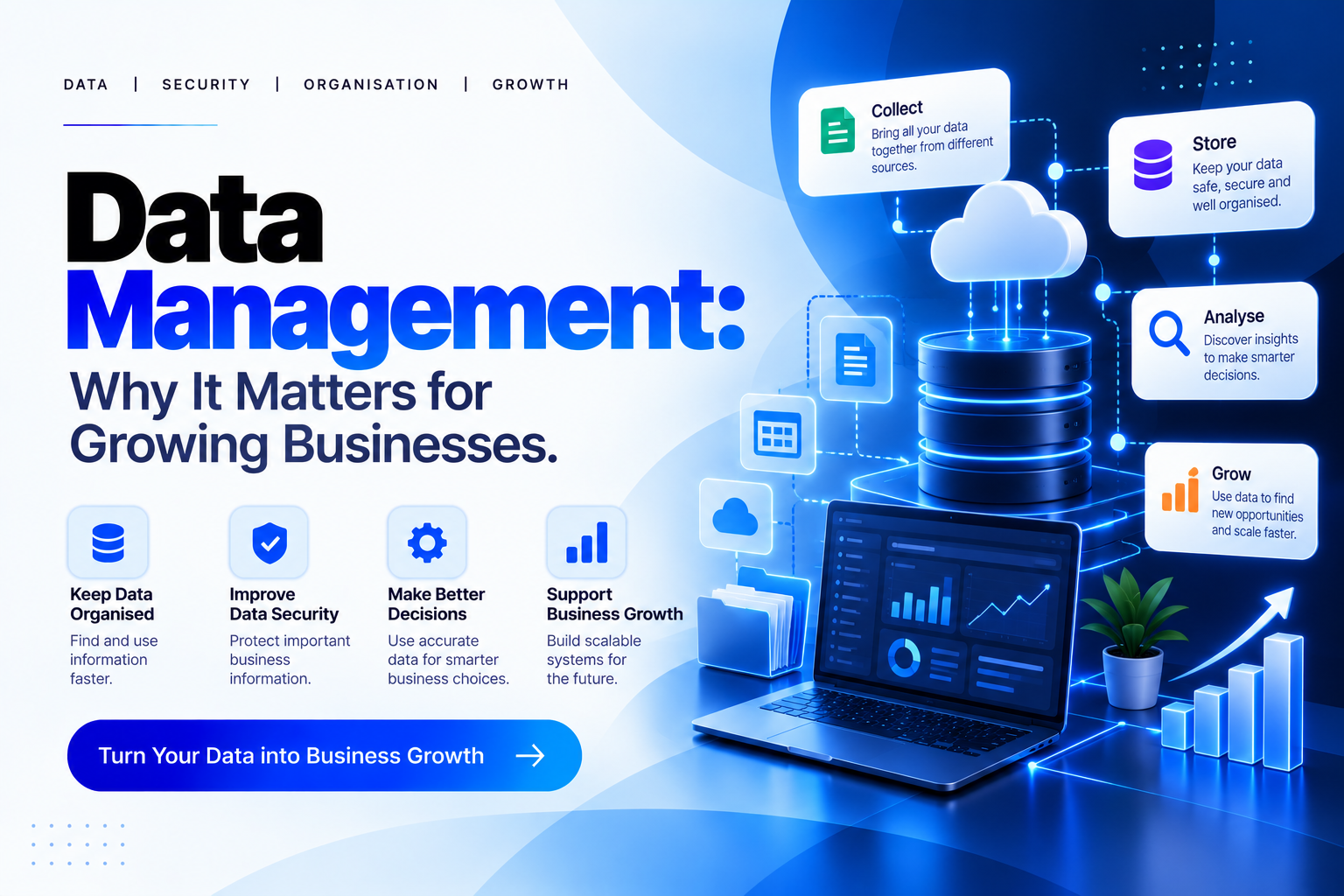
Data Management: Why It Matters for Growing Businesses
When a business is small, managing daily work is usually quite simple. The owner may know most customers personally, remember their regular orders, and keep track of expenses in a notebook or spreadsheet. But as the business grows, things start to change. There are more customers to deal with, more orders to manage, and more information to keep track of.
This is where problems can begin. Customer details might be saved in one file, payment information in another, and important conversations may be buried in an email inbox. Finding the right information at the right time can become a daily problem.
Data management helps businesses deal with these issues. It means keeping information organized, making sure it is correct, and knowing how to use it when needed. It may not seem like the most interesting part of running a business, but it can make everyday work much easier.
What Is Data Management?
In simple words, data management means taking care of the information a business collects and uses.
For example, an online clothing store needs to keep track of its products, customer orders, payments, deliveries, and returns. When all this information is stored properly, the owner can easily check which orders have been sent, which payments are still due, and which products are selling well.
Now imagine trying to manage all these details through different files, emails, and messages. Even finding the status of one order could take more time than it should.
A proper system helps avoid this problem. It keeps information in the right place and makes it easier to find when needed. Businesses do not always need expensive software to get started. Sometimes, keeping files organized and updating records regularly is enough to make a good start.
Why Is Data Management Important for Growing Businesses?
1. It Helps Businesses Make Better Decisions
Business owners have to make decisions every day. They need to decide which products to sell, where to spend money, and what their customers may need in the future.
Making these decisions without the right information can be difficult. An owner might think a product is popular, but the sales records may show that people are buying something else.
For example, a shop owner can check monthly sales to see which products sell well and which ones are often left unsold. This information can help the owner decide what to order next and avoid spending money on products that customers do not want.
Data cannot make every decision for a business, but it can help owners understand what is happening and choose their next steps more carefully.
2. It Saves Time and Makes Work Easier
Searching for information that should be easy to find can be frustrating. Employees might spend time looking for old invoices, checking customer details, or asking other team members for information they cannot find.
These tasks may seem small, but they can waste a lot of time when they happen every day.
When business information is properly organized, employees know where to look and can find what they need more quickly. They also spend less time correcting mistakes or entering the same details more than once.
This gives them more time to focus on their main work, such as helping customers, handling orders, and finding new business opportunities.
3. It Helps Businesses Serve Customers Better
Customers expect a business to answer their questions and solve their problems without making things difficult for them.
For example, imagine a customer contacts an online store to ask about a delayed order. If the order details are easy to find, the support team can quickly check what happened and give the customer an answer.
But if the information is spread across different files, the customer may have to wait longer or explain the same problem several times.
Keeping customer records organized can also help businesses understand what people like, what they complain about, and what they expect from a product or service. Businesses can use this information to improve their service.
At the same time, customer details should be kept safe. Businesses should collect only the information they need and make sure it is not shared with the wrong people.
4. It Keeps Important Information Safe
Every business has information that needs to be protected. This may include customer details, payment records, employee information, contracts, and other important documents.
If these records are lost or shared with the wrong people, the business may face serious problems. Customers may lose trust, and the company may have trouble carrying out its daily work.
Businesses can reduce these risks by using strong passwords, keeping important files in safe places, and allowing access only to people who need the information for their work.
It is also important to keep backup copies of important files. Computers can stop working, files can be deleted by mistake, and other problems can happen without warning. A backup can help a business get its information back when something goes wrong.
Keeping information safe is not only about using the right software. Employees also need to know how to handle business records carefully.
5. It Helps Avoid Mistakes
Small mistakes can create bigger problems when a business handles a lot of information.
For example, an employee might enter the wrong phone number, use an old delivery address, or add the same customer to a list twice. These mistakes can lead to missed calls, delayed deliveries, and wasted time.
Keeping records updated and checking them regularly can help prevent such problems. Businesses should also try to follow the same format when entering information so that records are easier to read and understand.
Mistakes cannot always be avoided, but keeping information correct can make daily work smoother and reduce unnecessary problems.
6. It Makes Business Growth Easier
A system that works well for a small business may not be enough when the company starts getting more customers and orders.
For example, a spreadsheet may be easy to manage when there are only a few orders each day. But when hundreds of orders start coming in, keeping every detail updated in the same way can become difficult.
This is why businesses should think about how they will manage information as they grow. They can start with simple tools and move to better systems when their needs change.
Having a clear way to store and update information also makes it easier for employees to work together. Instead of searching through different files, they can find the details they need in one organized place.
Good data management helps businesses handle more work without making everyday tasks harder than they need to be.
How Technology and Automation Can Help
Technology has made it easier for businesses to store and manage information. Some companies use spreadsheets, while others use cloud storage, databases, or customer management software.
The right choice depends on the business. A small shop may only need a simple system to keep track of orders and payments. A larger company may need software that connects customer details, sales, stock, and other records.
Automation can also help with everyday tasks. For example, a business can use it to send order updates, prepare reports, or move information from one system to another. This can save time and reduce the amount of work employees have to do by hand.
Artificial intelligence (AI) can help businesses study information, understand customer feedback, and find patterns in sales. However, the results depend on the information the AI tool receives. If the data is wrong or incomplete, the results may also be wrong.
Before spending money on new technology, businesses should first understand their needs and the problems they want to solve. Choosing the right tool is more useful than buying software simply because it is popular.
Common Problems Businesses Face with Data Management
Managing business information is not always easy. One common problem is that information gets saved in too many places. Customer details may be in a spreadsheet, order information in separate software, and important updates in email messages.
This makes it harder to find everything quickly. It can also lead to different files showing different information about the same customer or order.
Another problem is that records are not updated regularly. An employee may change a customer’s details in one place but forget to make the same change in another file. Over time, the information becomes confusing and less reliable.
Some small businesses also worry about the cost of software or feel they do not have enough technical knowledge to manage their information properly.
The good news is that businesses can start with simple steps. They can organize their existing files, decide how information should be entered, and make sure someone is responsible for keeping records updated.
There is no need to change everything at once. Fixing the most common problems first can make a real difference.
Simple Ways to Manage Business Data Better
Businesses can improve the way they handle information by following a few simple habits.
Keep records organized. Store information in clear folders or systems so employees can find it without wasting time.
Update information regularly. Check records from time to time and correct details that are old or wrong.
Protect private information. Make sure only the right people can access sensitive business records.
Keep backup copies. Save important information in a way that allows it to be recovered if the original files are lost.
Choose tools that fit your needs. Use software that suits your business, rather than paying for features you do not need.
Remove old information carefully. Get rid of records that are no longer needed while following the rules that apply to your business.
Teach employees how to handle data. Everyone should know how to enter, update, store, and share information properly.
These steps may seem basic, but following them regularly can help a business avoid many common problems.
Conclusion
Data management may not be the first thing business owners think about when they want to grow. They are usually busy finding customers, increasing sales, and managing their teams. Still, the way they handle information can affect almost every part of the business.
When records are easy to find and kept up to date, employees can work faster, customers can get better service, and owners can make decisions with more confidence. When information is scattered or incorrect, even simple tasks can become difficult.
Businesses do not need to buy expensive software or change all their processes at once. They can start by keeping better records, checking information regularly, and protecting important files. As the business grows, they can choose tools that help them manage the extra work.
The important thing is to build good habits early and improve them when needed.
In the end, collecting information is only the first step. What really matters is keeping it organized and knowing how to use it to help the business grow.
Data Management: Why It Matters for Growing Businesses

Neha - Founder
Comments (0)