
AI Voice Receptionists: Creating a Better Experience for Every Caller

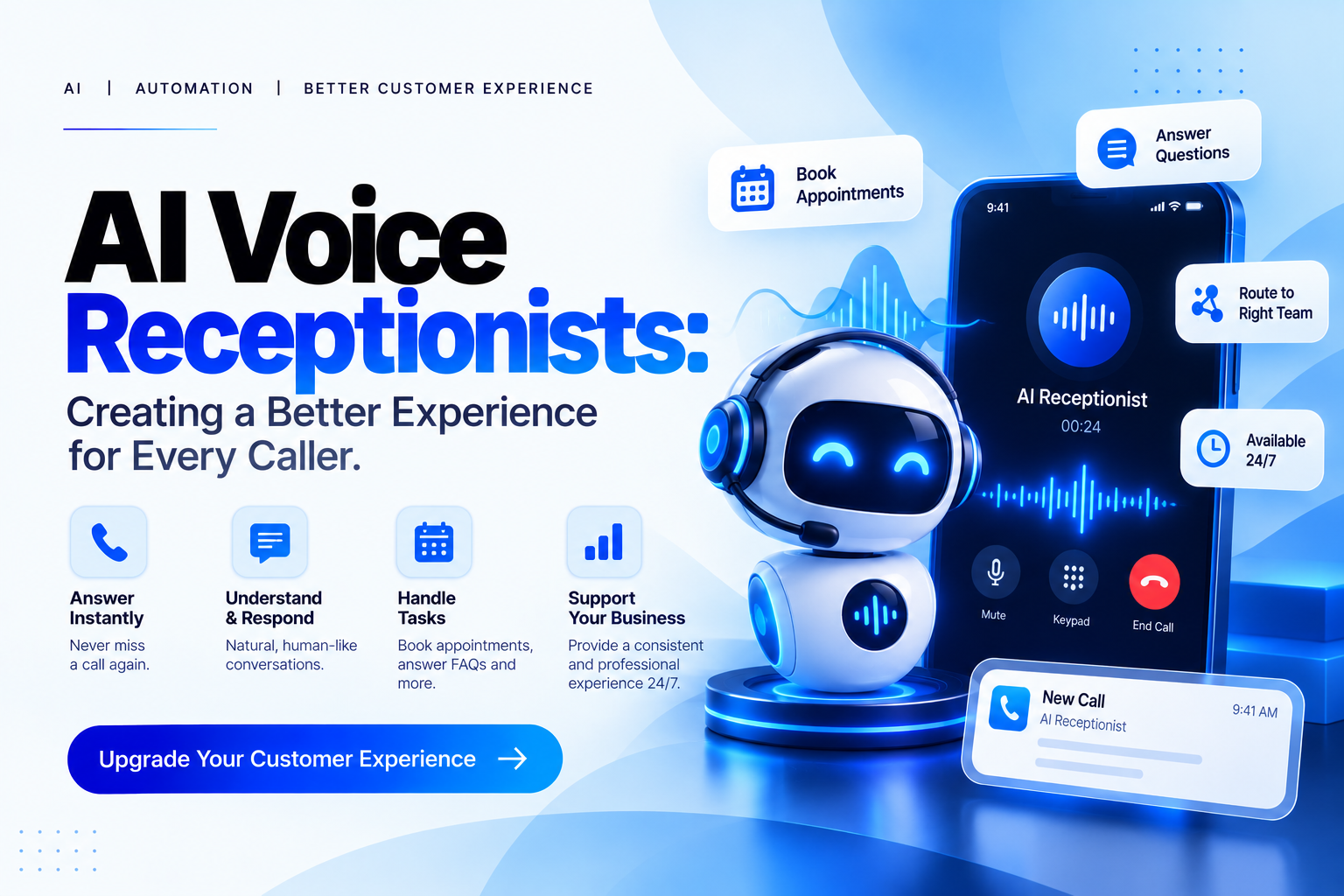
AI Voice Receptionists: Creating a Better Experience for Every Caller
A phone call can be an important moment in a customer's relationship with a business. Someone may be calling to ask about a service, book an appointment, check availability, or receive help with a problem.
For many companies, answering every call promptly is not always easy. Employees may already be assisting customers, handling administrative work, or managing several responsibilities at once.
When calls go unanswered, customers may have to try again or contact another business. This can create frustration and make it harder for companies to manage incoming enquiries effectively.
AI voice receptionists offer another way to handle suitable calls and support customer communication.
What Is an AI Voice Receptionist?
An AI voice receptionist uses artificial intelligence and voice technology to interact with callers through spoken conversations.
Depending on the system's capabilities, it may answer common questions, collect basic details, help with appointment requests, or direct calls to the appropriate person.
Unlike a traditional voicemail system, an AI voice receptionist can respond conversationally and gather information from the caller.
For example, someone calling a clinic might ask about opening hours or request an appointment. A voice receptionist could provide approved information and assist with the next step, depending on its integration with the clinic's systems.
A real estate agency might use a similar solution to collect preliminary details from people interested in buying or renting a property.
The purpose is to support routine communication while ensuring that more complicated conversations can reach a human representative.
The Potential Benefits for Businesses
1. Helping manage routine calls
Many businesses receive repeated questions about working hours, services, availability, and basic procedures. A voice receptionist can help handle suitable enquiries.
2. Supporting appointment requests
Where connected to a compatible scheduling system, the solution may help customers request or arrange appointments without requiring an employee to manage every step manually.
3. Collecting useful information
The system can gather basic details about why someone is calling, helping the team understand the enquiry before responding.
4. Supporting availability outside business hours
Depending on how it is configured, an AI voice receptionist may provide approved information or collect messages when the business team is unavailable.
5. Giving employees more time for important conversations
When routine calls are handled appropriately, employees may have more time to focus on customers who need personal attention, specialist knowledge, or additional support.
What Makes a Good Voice Receptionist?
The technology alone does not guarantee a good customer experience.
A useful AI voice receptionist needs clear information, natural conversation design, reliable handling of common questions, and a practical way to transfer calls when necessary.
It should also recognize its limitations. If a caller has an urgent, sensitive, or complicated request, the system should follow an appropriate escalation process rather than attempting to answer everything.
Businesses must also consider privacy, consent, call recording requirements, and the protection of customer information.
Testing is essential before introducing the system into everyday operations. Businesses should evaluate different accents, background noise, unexpected questions, and situations where the AI may misunderstand a caller.
Is an AI Voice Receptionist Right for Every Business?
Not necessarily. A business that receives very few calls may not need one, while an organization with frequent routine enquiries may benefit from exploring the option.
The decision should be based on actual communication needs, the expected customer experience, integration requirements, and cost.
A sensible starting point is to identify the most common types of calls and determine which ones can be handled safely through automation.
How TechPro Solution Can Help
At TechPro Solution, AI voice receptionist solutions offer businesses an opportunity to explore more organized ways of handling routine calls and customer enquiries.
The right approach begins with understanding the business, the questions callers usually ask, and the tasks the system needs to support.
The goal is not to remove human interaction. It is to make communication more convenient while allowing employees to focus on situations where personal attention matters most.
A better customer experience often begins with something simple: making it easier for people to get the information and assistance they need.
AI Voice Receptionists: Creating a Better Experience for Every Caller

Neha - Founder
Comments (0)